A few words about me before we start
I'm Giorgos Morogiannakis and I've been in business for 21 years.
I've built many successful businesses, and I was one of the people who founded and grew one of the largest franchises in Greece.
In one of my stores, we did something I still remember like it was yesterday: we had queues from day one.
So strong that a global giant in the food industry used it as a case study on how to set up a store that draws people in from the very first moment.
Over these 21 years I've helped a great many people organize their business better, make the right decisions and get closer to the success they're after.
Today, through my agency, WebDragon, I help businesses grow, get better visibility in the market and present themselves in a serious, professional way. Since 2016 we've completed more than 600 projects for clients in more than 15 countries.
I wrote this guide for one reason: to talk to you about something most people, whether they're just starting out or already run a business, don't understand at all, yet it decides success or failure: the internet and your online presence.
If you read this website guide to the end, you'll have the basic information you need to build something properly. Not "a website", but an online presence that brings results and supports your business.
How a business really works (and the role your website plays)
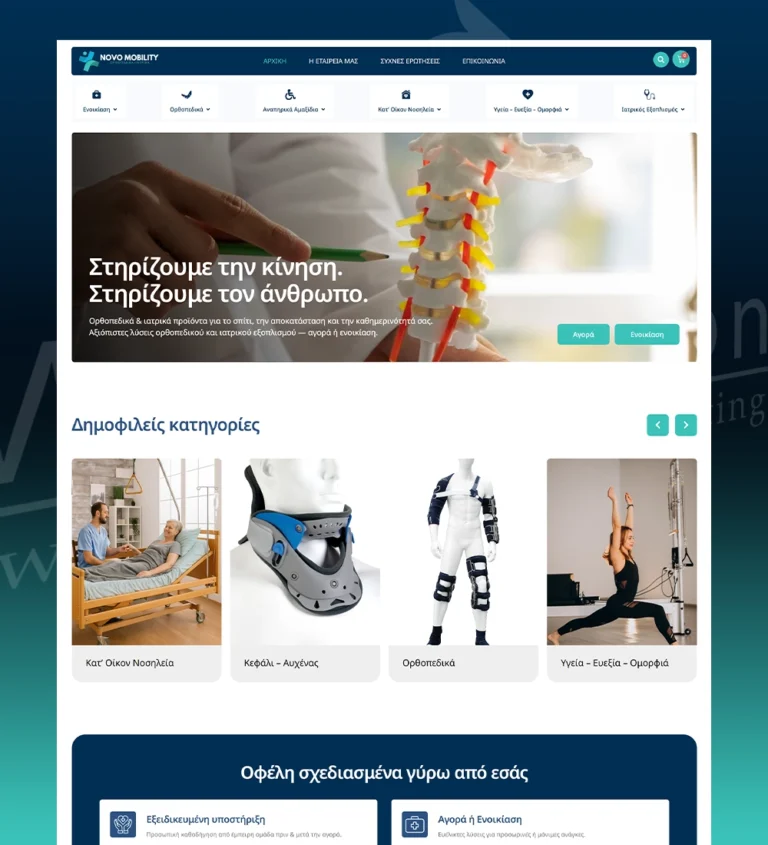
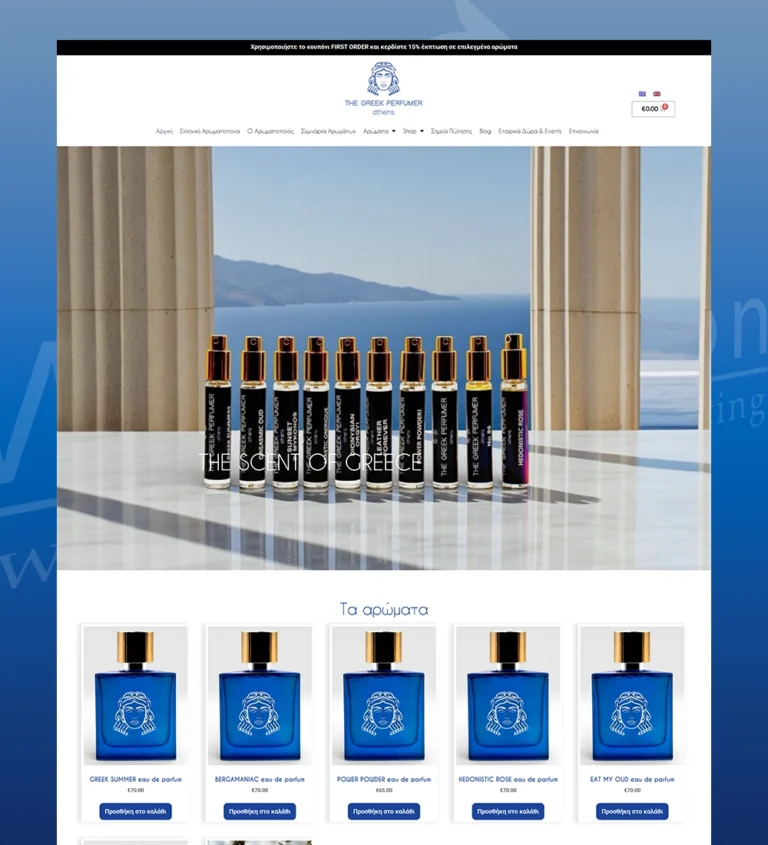
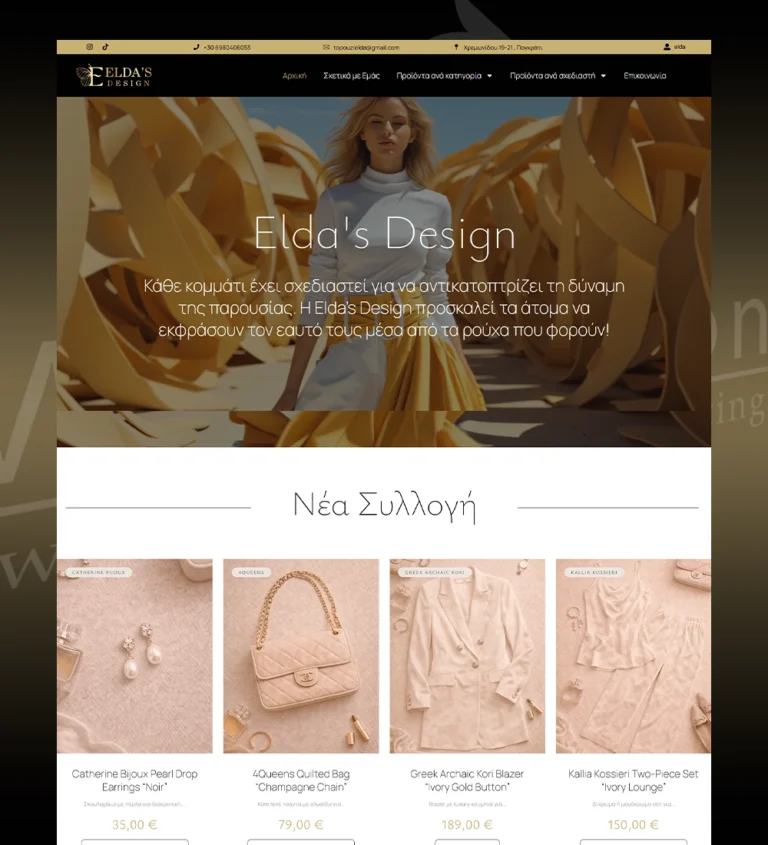
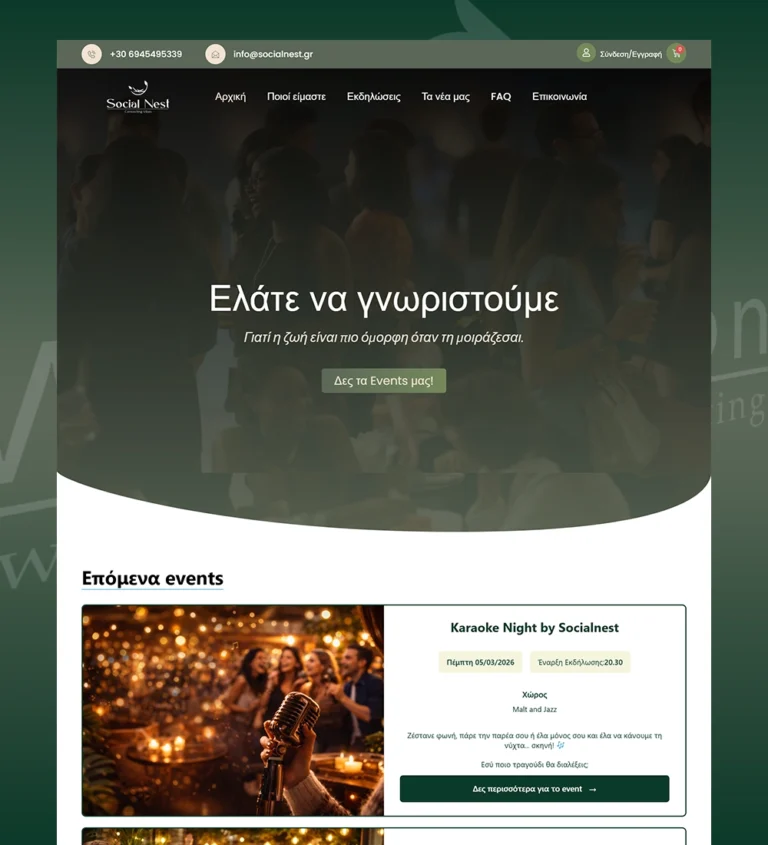
Your online presence is your business's shop window. It has to be flawless and show off your services and your professionalism.
Let's get things in order from the start.
Every business, without exception, needs a website. Whether it has a physical store, sells services, operates only online or is an online store. A website isn't "one more thing". It's the foundation. It's where people will look you up, see you, judge you and decide whether you're worth trusting.
Your website is your shop window. It's what someone sees of you when you're not in front of them. It works for you 24 hours a day, and that's exactly why it has to be clear, serious and professional. It has to say quickly who you are, what you do, who you serve and why someone should choose you.
But this is where the biggest mistake happens.
Many people think that if they build a website or an online store, customers, work and sales will automatically start coming in. As if it's a button you press and it starts printing money. That's not true. It's a lie. A website is not a customer-generating machine on its own. If nobody sees it, it won't bring results. And if you're not willing to take your online presence seriously, nothing will happen, no matter how "nice" your site is.
A website is a tool. And a tool needs strategy and proper use. You need to know what you're saying, who you're saying it to and how you lead the visitor to the next step without confusing them. You need to support it so that people actually see it. Because only then can it work the way it should.
That's why in this guide we'll focus mainly on the website. We'll look at what to watch out for when you build it, the mistakes most people make from day one, and how to build an online presence that isn't just "a page on the internet" but something that supports and lifts your business.
Building a website: the 5 elements it needs from the start
A website that works doesn't rely on a single element. It's a combination. If even one of these is missing, the whole result suffers.
These are the basic elements that need to be there from day one. Next we'll go through them one by one, in plain words, so you understand what each means in practice and why it's not enough to just "have them": you need to have them right.
- Speed
- Design
- A clear message
- Easy navigation
- Responsive on phones, tablets and computers
1. Speed
A website's speed isn't subjective. It's not a matter of opinion or taste. It's something that is measured, scored and has a direct effect on both the visitor and Google.
According to research, if a website takes more than 3 seconds to load, more than 50% of users will leave without even seeing it. And the longer the load time, the higher the chance the visitor leaves and never comes back. People have no patience and won't wait to find out whether you're "worth it".
Google knows this behavior very well, which is why it has built speed in as a key ranking factor. Through Core Web Vitals, it measures specific parts of the user experience, such as how quickly the main content appears, how quickly the user can interact with the page and whether the page stays stable while loading.
Put simply, Google doesn't care whether your website is "pretty". It cares whether it's fast, stable and easy to use. If it doesn't meet these criteria, it will struggle to rank high in search results, however good its content is.
Google PageSpeed Insights is the tool that shows this reality. It isn't based on assumptions but on real user data. It shows clearly whether a website meets the standards Google itself has set and whether it gives the visitor a proper experience.
On the websites we build, the goal is green scores in PageSpeed Insights on mobile too, not just on desktop, with a load time under 2.5 seconds. That means lightweight images, caching, few and well-chosen plugins, and hosting that doesn't choke when traffic comes in.
2. Design
A website's design isn't decoration. It's not about "looking nice". It's what makes the visitor understand quickly that the business is serious and organized.
Good design must first of all be clean. It should match the brand and support it. Colors need to be consistent across the whole site, and so do fonts. When every page looks different, the visitor gets confused and doesn't feel trust.
Beauty doesn't come from excess. It comes from simplicity. A site can be beautiful and minimal without tiring the eye and without making it hard to read. The visitor should feel comfortable, not struggle to work out where to start.
Contrast is also very important. Text must be easy to read, key points should stand out, and the buttons we want the user to press should be clearly visible. If everything has the same "weight" on screen, nothing stands out.
At the same time, there has to be order. Everything aligned, with proper spacing, nothing that looks "thrown in". If some text sits higher, some lower, and things are generally messy, the visitor's brain gets tired and they leave.
And most importantly: whatever works on desktop must also work on mobile. If the design breaks on mobile, text wraps oddly or buttons are hard to tap, you lose the people you should be keeping.
Good design doesn't make the visitor "notice" it. It helps them move around easily, understand quickly and take the next step without effort.
3. A clear message
When someone lands on your site, they don't give you time. They won't search, and they won't try to work out on their own what you do. If within the first few seconds they don't understand who you are and what you offer, they'll simply leave.
That's why the message has to be clear from the first moment. The visitor must be able to answer three simple questions right away: who we are, what we do and what we offer. If these answers aren't clearly visible, confusion sets in. And confusion kills sales.
A clear message doesn't mean a lot of words. It means the right words. One sentence that says exactly what you offer and who it's for, without generalities and without clichés. The simpler the message, the stronger it becomes.
Your website should speak directly and guide the visitor without confusing them. It should show them quickly that they're in the right place and that they can move on to the next step with confidence.
4. Easy navigation
Navigating a website should be obvious. It shouldn't take thought. It shouldn't take effort.
How many times have you visited a site and within a few seconds felt that things were "popping up" from everywhere? Boxes, buttons, messages, images. You don't know what to look at first, you don't know where to click, and in the end you can't find what you're looking for. In that moment you don't think much. You just leave.
A good website should be simple. It can be beautiful, but above all it must be clear. The visitor should easily find the menu, the services, the about page, the testimonials and the reviews. Everything they need to feel safe and make a decision should be right in front of them, with no searching.
The fewer clicks someone needs to reach what they want, the better. If they have to remember where they saw something, go back or try different buttons, they're already tired.
It's just as important that buttons are clear and easy to tap. With one move, the visitor should be able to send an email, call or send a message. They shouldn't have to think. They should just tap.
In the age we live in, we move fast. We're used to moving quickly with our fingers and finding what we want right away. If a website doesn't offer that, the visitor won't try. They'll go to the next one that makes their life easier.
And that's exactly where the lead, the inquiry or the sale is lost. Not because what you offer wasn't interesting, but because you didn't make it easy.
5. Responsive on phones, tablets and computers
Today, responsive isn't a "nice to have". It's a requirement. Because people no longer go online only from a computer. Most visits come from mobile.
Globally, more than 60% of all internet traffic comes from mobile phones. That means something very simple: if your website isn't built properly for phones and tablets, a huge share of your visitors gets an experience that doesn't work as it should. And the visitor won't stick around and try. They'll leave.
The same goes for purchases. In e-commerce, a large share of purchases now happens on mobile, with figures worldwide at around 55%–60% of online sales. So we're not just talking about "browsing" on mobile. We're talking about real decisions and real money being spent there.
And here's the thing: the user doesn't think "I'm on a phone". They simply expect everything to work properly. If text is small or broken, if buttons are hard to tap, if menus are confusing, if they have to zoom in to read or tap, the opportunity is gone. The lead will never happen. The purchase won't be completed. And it won't be your product's or service's fault. It will be the experience's fault.
A responsive website means the visitor can do what they want without effort: understand what you offer, find what they're looking for, read reviews, fill in a form, send a message or buy. When everything works properly on phone, tablet and computer, you don't lose people over "details". And those "details" are what decide the result.
What you practically need to launch a website
Now that we've seen what a website needs in order to function and actually bring results, let's talk about the absolute basics a website needs in order to exist on the internet.
No technical terms. No details you don't need. Just so you know what's what and what it takes to start properly.
The first thing you'll need is a domain name. That's your website's address. www.yourname.gr (.gr is Greece's country domain), .com, .eu or whatever else you choose. It's essentially your business's "name" on the internet. Something like your store's address. Without it, nobody can find you.
The second basic element is the server.
Put simply, the server is the place where your website "lives". That's where all the files, images, text, emails and backups are kept. The server directly affects speed, stability and the overall visitor experience.
In terms of cost, for a simple, properly built website, the domain and server start at around €100 a year. That covers a basic infrastructure that can support a small or new business. In all our packages, the domain and hosting are free for the first year and then cost €100 +VAT a year.
But as the website grows, so does the cost. More traffic, more products in an online store, more email accounts, bigger files and greater security needs mean you'll need a more powerful server. That's not a bad thing. It's simply a sign that the business is growing.
What matters is to understand that these costs aren't "wasted money". They're the foundation that keeps your online presence running properly. Just as a physical store needs rent and electricity, a website needs a domain and a server to exist and work.
You don't need to start with big packages or extras. What you need is the right start and the right foundation. The rest comes along the way, when there's a reason for it.
What you don't need to pay for at the start
When someone sets out to build a website or an online store, they're often offered things that sound important but in practice aren't necessary from day one. This creates confusion, raises the cost and ends up discouraging the business owner before they've even started.
The first thing you don't need to pay for at the start is big "SEO packages". SEO isn't something you switch on with a button. It's a process built over time, with proper structure, content and strategy. We'll talk in more detail below about what SEO is and when it really makes sense to invest in it.
You also don't need to pay for dozens of pages or complex structures. At the start, what you need is a few well-made pages with a clear message. More pages for no reason don't bring results. They just bring more confusion.
Many people also pay for impressive animations, effects and complex graphics. They may look nice, but they usually weigh the website down, make it slower and add nothing of substance.
You don't need to pay up front for very expensive tools, plugins or subscriptions that "do everything". Most of them you'll either never use, or you can add later, when you really need them.
Finally, you don't need to pay for things you don't understand. If someone can't explain to you in plain words why you need it now, you most likely don't need it.
A good start isn't about excess. It's about a solid foundation, a clear goal and the right decisions. Whatever is really worth it can be added along the way, when there's a reason and a result.
How much does a website cost: the cost calculator
Before you ask for quotes, it helps to have an idea of the cost. In the cost calculator on this page you choose the type of site, how many pages you need, features such as a blog or a second language, the level of SEO and whether you want monthly maintenance, and you instantly see an indicative price.
For reference, our prices are published and fixed all year round: Start €250 +VAT for a site of up to 4 pages in 3 days, Business €450 +VAT for up to 10 pages with a blog and per-page SEO in 5 days, and E-shop €700 +VAT with up to 50 products added in 10 days. Payment is 50% at the start and 50% on delivery.
The basics to settle before you pay for a website or an online store
How long will it take? The first thing to settle is the delivery time.
Otherwise the collaboration starts without realistic expectations, and then everyone gets frustrated for no reason. With us, a Start site is delivered in 3 business days, a Business site in 5 and an online store in 10, from the moment we have the copy and photos. An online store takes longer because it has products, payment methods, shipping and details that need to be tested properly.
Rounds of changes and corrections. This is where there's a big misunderstanding in the market. Some don't say at all how many changes the price includes, and then charge for every correction. Others promise "unlimited changes" and the job never gets finished. The right way is to have it in writing from the start, so you don't hold back when you want to ask for something.
Every package of ours includes 2 rounds of changes on the finished site. Before that, we send you the homepage for approval, so the direction is locked in before the other pages are built. With proper approval at the start, two rounds are enough for you to say: "That's it. That's what I want."
Full rights to the website, with a written agreement. This is one of the most important points, and most people don't even think about it.
The client must have full rights to their website, and this must be clearly stated in a written agreement. If tomorrow they want to change developer or leave their partner, they must be able to take their website and move it without problems, without anything being "held back", without blackmail, without feeling like a hostage.
What exactly the price includes. From the start, it must be clear what the price includes and what it doesn't. No generalities, no "we'll see along the way". The client must know exactly what they're paying for: which pages, which features, what is delivered and when.
Just as important is that there are no hidden charges. Whatever has been agreed must be in writing, either in an agreement or at least in a clear email. This protects both sides and avoids misunderstandings. When everything is written down, the collaboration runs calmly and professionally.
Support and maintenance after delivery. The work doesn't end the day the website is delivered. That's when real use begins.
That's why we give 3 months of free support after delivery, for the changes, corrections and adjustments that always come up once you start using the site in practice. After that, if you want, there's maintenance from €50 +VAT a month with updates, backups and security checks. We don't hand over a site and disappear. We stay close, to make sure everything works as it should.
Contact hours and availability. One of the most important points to settle is communication. What happens if something goes down? If something breaks? If there's an urgent issue?
We answer Monday to Saturday, 9:00 to 21:00 (Greek time), on +30 213 010 5653, +30 693 487 9060 and at info@webdragon.gr. We work with clients in the USA, Canada, Australia and Cyprus, and we know problems don't keep office hours. What matters is knowing in advance who you call and when they'll answer, so you're not left on your own if something happens.
Training and guidance. A website shouldn't be something "unknown" to its owner. The client should be able to handle it and do basic things on their own, if they want to.
That's why at delivery we show you in practice how to change text and photos, how to add articles or products and how to manage the main parts of your website, and we give you training videos to watch whenever you like. No stress and no dependence.
We built the website and followed the guidelines. Now what?
Great. We built the website. We worked on it, researched it, put in the right copy, the right structure, the right buttons. We have speed, we have design, we have products, we have everything we need. And now comes the real question.
How will people find us? How will they see us? How will we make sales?
Think of the website as a store. If the store is on a main street, people walk by, see it, come in, look around, buy. On the internet, though, it doesn't work like that. We're not on a main street. We're "in the air", inside a worldwide web, and someone has to find a way to discover us.
The more eyes you get in front of, the better your chances of selling. That's the power of the internet, and at the same time the point where the work begins after the build. A website can't magically bring in money if we don't do things for it. But once it starts performing, it can change our business. Below are the five ways that bring people to a site.
1. Ads: the "supermarket" of traffic
Think of it simply.
When you want milk, bread or pasta, you don't sit around wondering "how will I find them?". You go to the supermarket. They're there. And you buy what you need, as much as you need, as much as your wallet allows.
The same goes for traffic on the internet. If you want visitors, you don't have to wait for them "to find you". There are platforms that work like traffic supermarkets. You go, you pay, and you appear in front of people. Instantly.
And when we talk about paid traffic, there are two "main roads" worth knowing: Google and Facebook (together with Instagram). That's where most people are. That's where the most "traffic" happens. You can literally get set up in a short time and start appearing in front of an audience.
And here comes the big truth most people don't want to admit. Businesses say "I have a traffic problem". In reality, most of the time they don't have a traffic problem. They have a conversion problem.
Because, if you think about it, traffic today is more plentiful than ever. If you have a card and internet access, you can buy visitors. What isn't easy is turning those visitors into customers. Getting them to trust you, understand you, move forward.
So the real game isn't "bringing people in". It's building a system that makes traffic worth its money. A system where you put in €1 and get €2, €5, €10 back. A system that turns advertising from an "expense" into a growth engine. Like a modern goose that lays golden eggs.
And this is where serious businesses part ways with the rest. If you can't pay to acquire a customer and still make a profit, you don't have predictable growth. You're relying on luck. One season you'll have work, the next you won't. One day leads will come in, then a whole week of nothing.
Advertising, when it's set up properly, works like a lever. You pull the lever, eyes come in. If the system behind it is right, those eyes turn into leads and sales. And then the whole thing can become repeatable and scalable.
That's why ads aren't about "putting in some money and seeing what happens". They're strategy. They're testing. They're improvements. It's about finding what works and then scaling it. And once you find it, you don't let it go. You feed it, because it brings you results.
2. Google SEO: the marathon that builds value
If ads are the supermarket of traffic, SEO is something completely different. You don't buy visitors instantly. You build presence.
Think of it this way. Every day, people go to Google and type questions. They're looking for solutions, products, services. They're not looking for ads. They're looking for answers. And Google tries to show them the most trustworthy, most relevant and most useful websites.
SEO is the whole process through which you help Google understand who you are, what you do and why it's worth showing you high in the results.
And here we need to clear up something basic. Google doesn't trust you from day one. It doesn't know you. It has no data about you. That's why SEO isn't fast. It's a marathon, not a sprint.
SEO is done in many ways at once. First of all, through the website's structure. Through how your pages are set up, what your copy says, whether it's clear what you offer and who you serve. Google "reads" everything. Not like a person, but it tries to understand meaning, consistency and topic.
Then comes content. Articles, pages, answers to real questions people ask. When your website starts giving value, explaining, helping, Google sees that you're not just there to sell but to offer solutions.
"Trust signals" also play an important role. How long the website has existed, how often it's updated, whether there are reviews, whether other websites mention you. All of this tells Google you're not just anyone.
SEO doesn't bring results overnight. But once it starts working, it can bring you visitors without paying for every click. It's like building a store on a street that, little by little, becomes a main street. At first few people pass by. Over time, though, the number grows.
That's why SEO doesn't replace ads, and ads don't replace SEO. One brings immediate results. The other builds lasting value. Together, though, they can keep a business constantly visible, inspire trust and help it grow steadily.
3. Organic sales: when people find you without you paying every time
Organic sales are the result of everything you've built so far. They don't come because you put money into an ad at that moment. They come because someone found you, saw you, remembered you or trusted you.
Think of organic sales as the customers who walk into the store because they know it. Not because they saw a sign at that moment, but because they've heard of you, read something of yours or seen you again and again.
One way organic sales happen is through Google. When SEO starts working, people find you because they're searching for something specific. You're not "selling" to them. They come on their own. And that visitor is usually more ready to go ahead, because they already have the need.
Another way is through the content you've published. Articles, pages, information, even old posts that keep showing up. Good content doesn't stop working once you publish it. It can bring you people months or even years later.
The people you've already served also play an important role. When someone has a good experience, they're much more likely to buy again or recommend you. That's where something starts to be built that doesn't depend on budget. It depends on trust.
Organic sales aren't random. They're the result of consistency. They don't all come at once, and they don't come overnight. But as time goes by, they grow stronger. And every new organic sale reduces the need to keep paying to bring in the next customer.
They don't replace ads. They complement them. It's the point where you start to feel that the business "stands on its own". That you don't have to start from zero every time. And that, over time, is one of the most powerful things a business can build.
4. Social media: your daily presence in people's minds
Social media isn't just "posting something". It's the way a business shows that it exists, it's active and it's evolving. It's the shop window people see again and again, without having to visit your website.
People today spend hours on social media. They don't go there to buy. They go to browse, to read, to see something interesting. And that's exactly the opportunity. To appear in front of them naturally, without pressure, without a sales pitch.
Social media doesn't work on the logic that you post something and the same people always see it. The platforms show content to different people, to different audiences, every day. That means every post is a new chance for someone who didn't know you yesterday to see you.
You don't need to sell in every post. If you do, people will simply ignore you. What you need is presence. To show who you are, what you do, how you work, how you think. To give value, explain, answer questions, build an image.
Over time, this creates familiarity. When the other person needs what you offer, they won't search from scratch. They'll remember you. And then the message, the lead or the purchase comes much more naturally.
Social media doesn't always bring immediate sales. It brings something just as important: trust and repetition. People see you again and again. They get to know you. They get used to you. And that greatly shortens the distance to a decision.
It's not a channel for "posting whenever we remember". It takes consistency. Not excess, not daily stress, but a steady presence. Because whoever is consistently present ends up winning space in the audience's mind.
If you don't have time to post consistently, there are tools that help. We built TopSocial, which prepares and publishes posts automatically on Instagram and Facebook with AI, from €20 a month.
5. Word of mouth: your reputation on the internet
Word of mouth has always been the most powerful marketing. Today it has just changed form. It no longer happens only at the café or between friends. It happens online. And it's called reviews.
Reviews are your reputation on the internet. They're what others say about you when you're not talking. And believe me, people read them. Before they make a decision, before they send a message, before they buy, they'll look at what others are saying.
Google Business Profile plays a huge role here. It's one of the first things someone sees when they look you up on Google. That's where your rating, reviews, comments and activity show. And Google takes all of this very seriously when deciding whether to show you higher or not.
But not all reviews have the same value. A review that just says "I was happy" helps, but doesn't say much. A specific review, on the other hand, helps far more, both the next customer and Google.
For example, if you have a store that sells tiles, it's much stronger when someone writes: "I bought bathroom tiles from such-and-such store in Athens and I was very happy with the quality and the service."
That shows what you sell, where you are and why you're worth it. It builds trust and sends signals of credibility.
Reviews don't come on their own. You have to ask for them. The right way, after good service. Not pushy, not fake. Real experiences from real people. That's what builds a reputation.
The more your reputation grows, the more easily people trust you. And the more people trust you, the more easily Google trusts you too. That's how the circle closes. More visibility, more credibility, more organic sales.
Word of mouth isn't something you "do once". It's something that's built continuously. And when it's built properly, it becomes one of the strongest pillars of your business, without having to pay every time to be seen.
The bottom line: nothing works on its own
If you keep one thing from this whole guide, keep this: no website succeeds on its own. And no channel can save a bad foundation.
The website is the center. Everything ends up there. Ads bring eyes. SEO builds presence over time. Social media keeps the business alive in people's minds. Organic sales and reviews build trust.
But all of this only works when it's tied together. There's no point pouring money into ads if the visitor gets confused. There's no point waiting on Google if you don't show it who you are. There's no point posting on social media if there's nothing serious behind it to support your image.
Success on the internet isn't a trick. It's not a hack. It's not a button. It's a system.
A system built step by step, with clear decisions, the right order and realistic expectations. And when it's built properly, you don't have to chase the customer. They find you.
Website design with WebDragon: what you get
We design and build websites with proper structure, clear content and a technical foundation for future growth. We start by analyzing your business and your goals, we write the copy so it speaks your customers' language, we optimize for Google and mobile, and we add clear buttons that turn visitors into customers.
Every website we deliver has SSL, a firewall and spam protection on forms, automatic backups, buttons for calls, WhatsApp, Viber and Messenger, a Google Maps connection, Google Analytics 4 and Meta Pixel, proper URLs, titles, meta descriptions and schema markup. It's built on WordPress with Elementor, so you can change text and photos yourself, and we give you a live demo for approval before it goes online.
A complete website build starts from €250 +VAT, with free domain and hosting for the first year and 3 months of support. It's the solution for businesses that want a serious online presence without unnecessary cost. A properly built website solves problems like these:
- The website doesn't appear on the first page of Google
- Visitors leave without taking any action
- You struggle to stand out from the competition
- You have no clear way to turn visitors into customers
- People can't find your website
If you'd like us to look at it together
I truly hope this guide has helped you and answered many of your questions. My goal wasn't to tell you "what to buy", but to show you what matters, what doesn't, and how to think clearly when you set out to build your business's online presence.
If you'd like to discuss your own case more specifically, we can talk. I'll look at what you do, what you offer, who you serve and what the right first step would be to start in an organized way, without wasting time and money on wrong moves.
You don't need to make it perfect from day one. You need to do it right, step by step, with a clear strategy.
So if you have more questions or want guidance on how to start properly, send me a message or call +30 213 010 5653 and we'll look at it together.
Giorgos Morogiannakis